"The camera can capture my face, but until it captures my soul, you ain't got a movie"


Thursday, 19 November 2015

Minute Meetings (All)

18.11.15
  • We each discussed and presented our ideas to everyone in the group.
  • For the next lesson we need to think of everyone's ideas and make points on what we like about them


19.11.15
  • We found our thriller idea, girl in room dressing up, however it reveals at the end to show a man dressing her up.
  • Everyone in the group should have made a mood board of ideas about the thriller.
  • We also had to keep in mind, a backup idea and what it would be.


20.11.15
  • We found our backup idea- which is my first thriller idea (the racist serial killer)
  • We discussed the age group of our two actors, girl (16-18 years old) and man aged 45+ years
  • For Mondays shoot we allocated tasks to each person in the group: Olly will bring his camera and tripod/ Naomi will bring toothbrush and makeup/ Tash will plan the idea and I will direct the shoot and act as the older man.


23.11.15
  • We filmed the sequence that we planned
  • We used many extreme close-ups
  • Reminder: Olly and Naomi, bring in laptops so we can edit


24.11.15
  • We discussed pre-production and reflected on the shoot.
  • Olly edited the thriller
  • Everyone needs to do reflection and pre-production to put on blog.


30.11.15
  • Finished making the PowerPoint presentation for thriller
  • Olly needs to put paste the moon board on to the  PowerPoint


1.12.15
  • Amr is drawing the storyboard
  • Natasha need to finish editing the PowerPoint presentation


2.12.15
  • Amr still drawing storyboard
  • Writing up storyboard information: scene by scene


3.12.15
  • Amr has finished the storyboard
  • Olly needs to Photoshop storyboard together
  • Rest of the group needs to finish writing notes and information for the storyboard


Our group discussing in one of our minute meetings

Wednesday, 18 November 2015

Feedback and Response on Thriller Ideas


                Thriller Idea No.1


Here is my feedback:


Response:


I would, try to expand the sequence by adding another element before or after. For example, her daily routine: brushing her teeth, drinking coffee; going to work. That could then lead to the scene where she is sitting on the sofa. Or I could add a section after showing the killer interacting with the victim. I need to add another element in the opening sequence to make it interesting and engaging. I would like to show the killer’s interaction with the victim, and perhaps use P.O.V or interesting camera angles to give a distorted and uncomfortable feel to the situation. From the classes feedback, I’ll try and explore the killer’s normal everyday side and her dark and evil side in order to create an interesting and original thriller sequence. In short, I need to add to my opening sequence idea in order for it to maintain a tense and interesting tone across the two minutes.


                Thriller Idea No.2


Here is my feedback:


Response:

I need to add more conventions of the thriller genre from the start in order to make it more clear that it is a thriller. I could do this with the use of non-diegetic sound such as an eerie soundtrack or using diegetic sounds e.g. kettle whistling, to create tension. In my original idea I tried to condense an entire film in to the two minutes; the opening was very detailed and showed their relationship becoming murderous; this doesn’t leave any more space for the film develop. Therefore, I should keep my opening sequence simpler and dilute the amount of information I give the audience. I should show the dysfunctionality of the couple as an element to the film rather than the central focus, It would make the narrative more interesting. I could alter the opening sequence, to show that they are a normal couple and the man is talking to his wife, not realising that she is dead the entire time. This would create tension and shock and would allow for the story to develop from there. After taking the feedback into consideration I could: simplify the opening sequence and add more thriller conventions to make the genre more evident.


                 Thriller Idea No.3


                Thriller Idea No.4


Monday, 16 November 2015

Genre, Sub-Genre and Hybrid Genre


Genre:
Is a category in which a film is allocated based on the films themes and convention.
E.g. Party/Jokes/Explicit Language/Upbeat, all these themes and conventions would place the film as most likely a comedy .


Sub-Genre:
Are dividing categories within a genre. It is a genre within a genre a subdivision.
E.g. Thriller ( genre)= Psychological Thriller (Sub-Genre).


Hybrid Genre:

Is a mix of two or more ‘main’ genre’s (e.g. Action/Comedy). These films combine different elements and conventions of the multiple genre’s to create a film combining all the different genre's. E.g. Horror + Sci-Fi = Alien. 


Conventions of a Thriller: Word Map


Conventions of a Thriller

Psychological Thriller


Is a sub-genre where the plot and protagonist explore mental conflicts. The protagonist is in a situation that affects their sanity. It usually involves an internal mental battle or the protagonist having to escape a situation caused my their mental distress. It’s usually ends with a violent ending.


 Supernatural Thriller


Is a sub-genre where mystical elements are a part of the plot, usually the protagonist has to battle an antagonistic force. Some characters may have supernatural abilities.

Crime Thriller

Is a sub-genre that focuses on crime and usually follows a detective or a criminals perspective. It tends to have a lot of physical action, it usually follows a criminal who eludes police whilst law enforcement tries to catch them.


Conspiracy Thriller

Is a sub-genre that focuses on a character that is on the pursuit to uncover a secret organisation or secret kept by governments. It’s usually a battle between the protagonists and a large powerful group of people, in order to expose something.


Legal Thriller


Is a sub-genre that centres around legal proceedings. Usually the protagonist is the lawyer or client, that find themselves in a situation where they are in danger. E.g. testifying in court against mob, the client becomes a target. 


Disaster Thriller


Is a sub-genre most likely a natural disaster that occurs and the protagonist is trying to stop or escape the disaster. These films are usually big budget movies.


Monday, 19 October 2015

Prelim Task Part 2

Prelim Task Part 2
In collaboration with Daisy Doidge-Hill


This is the Finished Video


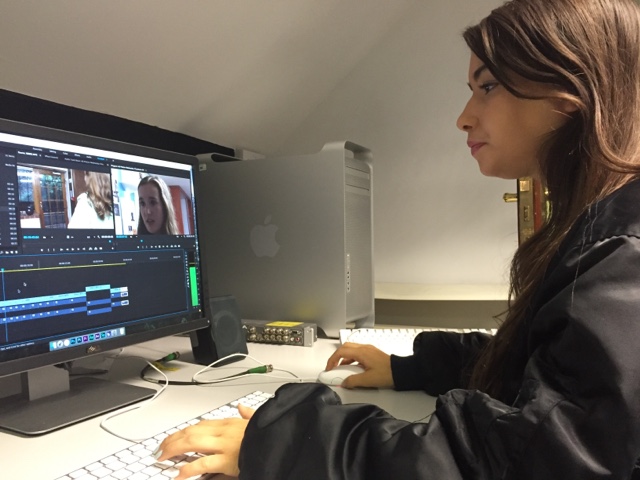
This was a continuation on the first prelim task we did a week prior, which we filmed a sequence. In the second part we edited the footage we took. 


We had over 30 clips, shot with different camera angles so that it followed the storyboards. 


Some of the footage were did not fit in the sequence and others were not acceptable to put in, due to mistakes in the actor’s acting. We used the storyboards so that we could place the footage in the right order; and used dialogue cues to know where to cut and place the next clip.


After cutting the specific parts in the footage, we dragged them in order of the storyboard, on to the timeline. We encountered a few problems when doing this; because there was a limited amount of footage for each shot in the storyboard. When filming we had some problems such as: actors getting lines wrong; actors breaking character; people from the outside interrupting the shot and especially mistakes with continuity.

One of these continuity mistakes was when my character walks in. I open the door and say “Do it come on!” ; when I enter it’s a long shot and then it cuts to a mid-shot and then an over-the-shoulder shot. As I’m speaking the door behind me is closing and making a creaky noise; however when it moves from a mid-shot to an  over-the-shoulder the door is still closing and does not synchronise with the door closing during the mid-shot. These were continuity mistakes that we did not think of when we were filming. If we had used more than one camera we could have filmed all three shots at once and the position and movement of the door would sync across all three shots.

Throughout the footages we found that there was a problem with continuity, especially when filming a scene over 30 times, without proper observation, there are many mistakes that can be made; this can completely ruin the continuity between shots.


  As you can see only small seconds of footage were taken from each clip to fill the timeline.


When editing we had to match on action, and cut and join clips even during sentences, in order to achieve a smooth sequence. 


After having filmed and edited the prelim task, I realised the importance of continuity and how small mistakes can affect the tension and tone of the scene. I also discovered that when editing its essential to cut on action and cut and join clips at the right moment, in order to maintain tension and create a fluid motion through each shot.


Wednesday, 14 October 2015

Sound within Thrillers: Analysis of 'The Silence of the Lambs'


The Silence of the Lambs

In the following essay I will explore how sound is used to affect the audience. 

The sequence starts with the main protagonist (Jodie Foster)  waiting outside a door, before she breaks through it. Whilst this happens there is diegetic music playing, the song playing is ‘Real Men’ by the Savage Republic. The music is asynchronous with the action because it is has a faster pace than the action occurring on-screen; additionally the song contains an upbeat rhythm which contrasts the slow and dark nature of the scene. Furthermore, it can be argued whether the music playing is parallel or contrapuntal; the music is of a rock/punk genre the punk genre connotes elements of danger, aggression and darkness, which could reflect the films thriller genre. However, the fast drumbeats and electric guitar heard conjures a sense of excitement and liveliness which juxtapose the tension in the scene.

When she enters the room she finds a rotting corpse in a bathtub, at this point non-diegetic high pitched chimes can be heard. This heightens the eerie atmosphere because it is contrapuntal and we associate chimes and delicate instruments with children’s nursery rhymes. It also is an effective way of marking the moment and indicate to the audience that they have discovered something.
After discovering the body the lights in the room suddenly turn off and the diegetic rock/punk music playing stops as well. The room is pitch black and there is no sound. It is effective not to use sound at this moment because the audience have no visual or aural awareness of what is happening or going to happen in the scene, which builds on the tension. 


All of a sudden, we hear the high pitched sound of the night-vision goggles turning on, the sound itself is man-made and unnatural thus emphasising the creepy atmosphere of the scene. At this point we hear the ambient sound of water dripping and the main protagonists heavy breathing.


By bringing these two diegetic elements together it places the viewer in a position of isolation and fear. While the main character walks around and makes her way through the room her breathing becomes heavier and faster; this synchronises with the growing tension in the scene. Even though she is walking at the same speed her quicker breaths increases the pace of the scene, and enhances the suspense. 


At 1:21, a non-diegetic soundtrack fades in, it becomes louder as the killer gets closer to the protagonist. The soundtrack is ‘Magic Flute’ by Mozart, the use of orchestral/opera music is effective in creating a dramatic tone to the scene. The low bass notes create a macabre feeling, especially as the killer move closer to the main character. The soundtrack grows more intense when the killer reaches with his hand out to the protagonists. The slow pace of the song is synchronous and parallel to the action of the scene because the killers movements are quite slow and the scene is emotionally intense and dark, literally and metaphorically. When the killer gets much closer, higher pitched string instruments begin to play which make the scenes ambience stressful; it also mirrors the nerve-racking moments before the impending encounter, between the protagonist and antagonist.

At 1:46, the killer pulls out a gun behind the main character, the soundtrack remains constant and the instruments keep on the same high notes. This amplifies and sustains the tension. Consequently, the killer goes on to cock the revolver, the sound of the guns hammer cocking , at 1:51, is extremely loud and slowed down. This maintains the tension and builds the climax because the audience is forced to slow down and acknowledge the pivotal moment; it lets the moment sink in.


The protagonist, turns around and fires her gun repeatedly, the rounds are fired at extremely fast rates which contrast the slow movement of the entire scene; this disorients the audience because of the sudden sound effects of gunshots.


Whilst firing the gun the protagonist shoots a window, the diegetic sound of glass breaking contributes to the chaotic intensity of the moment. 


The protagonist falls on the ground, and tries to reload her gun, whilst doing so we can hear the clanking sound of bullets dropping on the floor. The diegetic sound of the bullets hitting the floor, give insight into the characters emotional state, she has dropped the bullets because she is shocked and afraid. 


Diegetic and non-diegetic sound in the sequence was effectively used in creating an emotional connection between the audience and characters. The soundtracks used helped in showing and emphasising the characters mental and emotional state. The sounds used in the sequence helped establishing the genre of the clip as a thriller.


Click below to watch the clip