"The camera can capture my face, but until it captures my soul, you ain't got a movie"


Friday, 11 November 2016

Process of Designing Individual Digi-packs

I have taken some photographs of my process of designing the individual digi-packs.
 Below are some photos I captured:


Overall, I feel that I have incorporated the elements I initally thought of; such as, the snake element, and dress being blown by the wind. I also think that the snake element further connotes the artist's image as being mysterious and dangerous.

Wednesday, 9 November 2016

Research into Similar Products - Album Artwork

In the initial stages of designing our album cover, we were all asked to individually research the album artwork of four artists who are in the same genre (R&B) as our artist.
The four albums I chose are listed below:


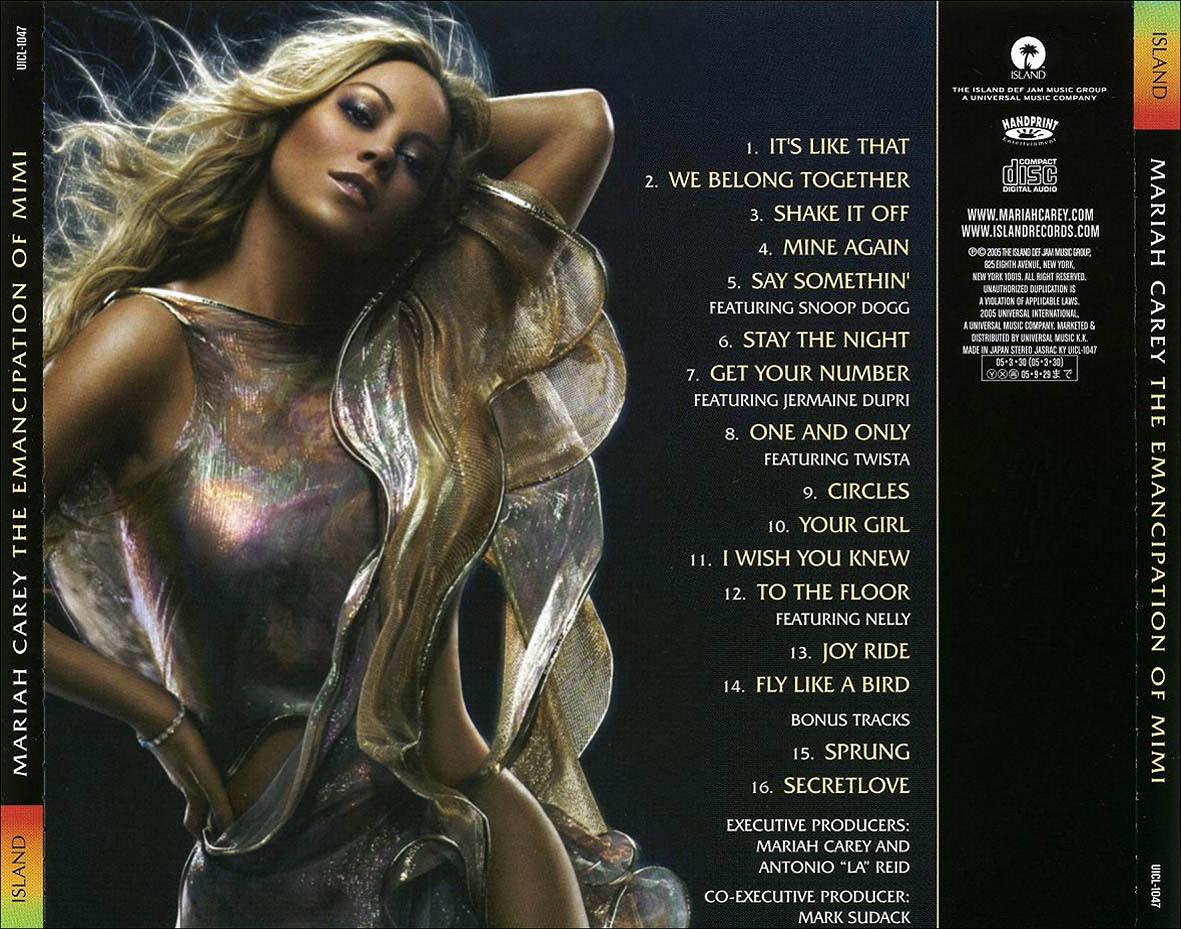
  1. The Emancipation of Mimi - Mariah Carey
  2. My Love is Your Love - Whitney Houston
  3. B'DAY - Beyonce
  4. Share My World - Mary J. Blige
One thing all of these album covers have in common is that it involves women posing for the camera. By posing for the camera it connotes at their glamorous and diva personality, which is what they are marketed as, by the industry. Additionally, they all items of clothing that connote at their fashionable and glitzy lifestyle.

 On Mariah Carey's album 'The Emancipation of Mimi' she is wearing a gold dress that blows in the wind, the colour gold connotes wealth,fame, grandeur and luxury.

On all the albums the artist dominates the frame. On Mariah Carey's album she is in the center posing. On Whitney Houston's album cover she takes up most of the cover and is again positioned in the center. Although the other two album covers have the artist posing to one side of the frame. The camera is at a mid-shot which allows them to take up a large amount of the album cover. They are the main feature of the album because they are synthetic artists, who are marketed off their looks and personality.


The first album artwork I will look at is Mariah Carey's 2005 album 'The Emancipation of Mimi'. 
On this album cover she is positioned in the center of the frame. This indicates that she is the main focus. This is a common characteristic of album covers for synthetic artists because they are marketed based off their looks and personality. They create this diva, glamorous star ideology which people want to be part of. Thus attracting her fan base. The way she is posing and is positioned, having her legs spread apart, hints at her domineering and confident personality which attracts audiences to her ideology.
The gold dress and shoes, also contribute to the overall glamour, elegance and value of the artist. This because gold is universally associated with wealth. The lighting seems to be coming from above her, this causes some parts of her body like the neck, stomach and insides of legs to be dark while the outline of her dress and body reflect the light. The shadows on her body connote at her mysterious and seductive nature, a common representation of women in R&B music.

The next album cover I will be looking at is 'My Love is Your Love' by Whitney Houston. 
We can see her crouching, her positioning makes her look like an ordinary person but she is still the mega-star 'Whitney Houston'. This follows Richard Dyer's Star Theory paradox, where its said that 'The star must be both ordinary and extraordinary'. Behind her the tarmac road is wet, however it is dry where she is crouching. This connotes that her icon image is untouchable. It also targets her target audience, who are females in their late 20's ( 25 - 30 years old). She seems down to earth and comfortable with herself; her clothes are stylish and new and she exudes a sense of maturity. This reflects with her target audience of adult women who are not young and not old. The lighting is mainly from her side and above, this gives a glow to her skin and lights up her face. This connotes that she is being celebrated. This is a common lighting characteristic with synthetic artists, it glorifies their image, which is used to market and sell their albums, this concept is based of Negus's Star Theory.

The next album cover I will be looking at is ' B'Day ' by Beyonce


On this album cover, Beyonce's hair is placed in an up-do, it is styled to look natural and slightly messy, her make-up is simple and her clothing in not over the top. Her styling on the cover follows Dyer's Star Theory paradox that "a star is both ordinary and extraordinary". Her obvious star status and name make her extraordinary but the way she looks on the cover is made to look ordinary. This is so her target audience can identify with her and feel connected not only by her music but by her looks. This means her fans will be more dedicated to her and try to emulate her, this in turn will bring more fame to the artist and more money to the record company. Additionally, by having the mid-shot, she is framed much closer and this creates an intimate experience between the artist and the audience. 


The last album cover I will be looking at is 'Share my World' by Mary J. Blige.

On Mary J. Blige's album cover she is looking away from the camera. This hints at a sense of mystery, making the artist appear alluring. This is a common convention in the R&B genre, to portray women as seductive enchantresses. By wearing all white it connotes at her purity and elegance and further emphasizes her image as a confident woman and a diva. Her target audience appreciate her image because not only do they look up to her but they try emulate her ideologies. Which in turn increases profits for the record label as peoples obsession with her grows, therefore more money is spent by the consumers on: merchandise and albums. 

She takes up most of the cover like all the synthetic artists of the R&B genre, this establishes her image to her target audience. However, her body and face are slightly out of the frame. This may connote that there is more to her than at first glance. It also may highlight Dyer's Star paradox, "the star is both present and absent". She exists and is discussed in the consumers life, however she is physically not there and is unreachable. 
Mary J. Blige is wearing 'FENDI' glasses a high fashion clothing brand. Therefore, emphasizing her status as a star.


Sunday, 6 November 2016

Problems on the Shoot Day

The night before our shoot day, both our lead dancers Maddy and Eden were sent home due to a virus they contracted. This gave us less than 12 hours to find new dancers and teach them the choreography. We went to the dance company rehearsal and notified them of our situation. Lottie the dance company teacher taught the girls who were rehersing a simplified version of our choreography. The morning of our shoot we met with Alice Marriot and Charlotte Mcghee both of which were happy to step in and do the dancing for us. We were lucky to find these two replacement dancers. They managed to learn the choreography in the limited amount of time which was extremely helpful. 

Overall, the dancers looked amazing in the video and although it was unfortunate that Maddy and Eden became ill, we managed to find a solution to that problem.

Saturday, 5 November 2016

Shooting Scheduale

For the shoot day we created a scheduale, outlining the order of whoch we will shoot the set and also the actor/props/make-up and hair needed at certain times. This is so that we can have a clear outline of the structure of the day, so that all the cast and crew know what is happening thoguhout the day. It also informs the crew when to build the next set and tells the actors when they are needed throughout the day. This will save time on the shoot day and will hopefully make things run smoothly. We chose to film the wheel first, because this is the biggest and most important element and the other sets cannot be built until the wheel is dismantled. This is because the wheel takes up alot of space in the studio. 

We also gathered the emails and phone numbers of all of our actors so that we can reach them on the shoot day, if we cannot find them. It allows us to communicate and make sure everyone knows what is happening. We blanked out the actors phone numbers and emails for security reasons. 


Friday, 4 November 2016

Shot List

We created a shot list of all the sets/elements in our music video. In each set up we noted the shot type (such as camera angle); the actors in the shot; the props/costume and a short description of what we want to capture (how the actor should move around and what they should do). This was so that we could have a plan of what shots we want, in what order we will film and what we will need for each shot. This would in turn save time for us on the shoot day. 

In our group we split up the shot lists and everyone in the group did 1 or 2 shot lists for each element.

First we will do the wheel element, then the screens, the dance element and then the rapper in the armchair and lastly the fluorescent light maze.  


Tuesday, 1 November 2016

Role of a Director - For our Music Video

For our shoot day my role in our group will be as the director. In order to assume this role I have done some research on what a directors’ roles are in the production process.

A film director is a person that manages and controls the operations of making a film. They control a film’s artistic and dramatic structure/features. They guide the crew and cast into the direction in which they envision the final product. The director oversees the production and filming and is responsible for choosing the actors, crew and creative aspects of the film. There are different types of film directors some allow more freedom for the actors and crew to have some artistic licence, whilst others are much more hands-on and have a precise vision and concept of what they want the cast and crew to do. They lead the production of the film and deal with issues that arise and ultimately influences the end product. A director is involved in all aspects of production from helping the artists develop storyboards and fitting their idea within the confines of the budget; to managing the shoot day and capturing their vision on camera; lastly, they work with the editors and sound/composers so that the final touches realise their concept. 


Looking at the role a director has I am prepared to assist in all matters of production and mediate and problems that may arise. I will work with the actors and crew so that the final product can come out like we conceived in our group in pre-production. 


There are many tasks and elements I will be involved in. I will use the knowledge and feedback from my group and crew so that we can work efficiently and quickly within the time slot we have to film. 

Animatic Storyboard Reflection


The animatic storyboard has allowed us to have an idea and a pre-visualisation of our music video. It’s helped us to construct the flow and tone of the video with the different elements it also has shown how the different elements can link together. Through the use of the animatic storyboard I notice that the song track and visual concept works well together and is harmonious. The soft vocals and rhythmic bass beats connotes an intimate and sensual vibe, which is reflected in the subtle seductive nature of the video. I also think that moments where the shots are cut to match the beat of the music, are extremely effective because it is a simplistic device that highlights the acoustic dimensions in the music.  

As we edited we noticed that we did not have enough shots in some areas and we could expand this by featuring more shots of the rapper, dancers and more close-up shots of the artist. Due to our different elements requiring a set to be build, we want to make most of the set in each element, such as the silhouette wheel, fluorescent light maze etc… However, if we intend to heavily feature these elements we need to consider different ways to shoot these scenes in order to keep the audience interested throughout. In terms of any changes, I do not think that this will cause any changes to the actual concept. Although we need to use more experimental shots in each element to keep it interesting and to carefully edit these shots together in post-production.


Overall, I believe that our animatic storyboard has given us a detailed template and idea of what we want to film and has brought up some issues we need to think about such as including more shots.