Monday, 8 February 2016

Sunday, 7 February 2016
How does your media product represent particular social groups? (Task 2)
In our title sequence, we focused on the representation of two social groups, men and women and how our shots present the male and female characters in the stereotypical roles of their gender. However at times, the girl is seen as subverting the stereotypes of a female (e.g. being clean). Throughout the sequence, the man is shown adhering to male stereotypes of being strong and powerful. We also analysed how age is represented and how being old or young affects the representation of a character within the clip.
Mise-en-scene:
The girl is wearing a white corset, the colour white connotes her purity and it represents her innocence this is an adhering female stereotype because it made the girl appear angelic and soft. Additionally, the white colour drains any warm tones in the shot, making her appear more dead.

When we are first introduced to the man we see him aggressively grab a pair of old, leather gloves and putting them on, the tattered and rugged appearance of the gloves juxtaposes the softness of the girl. The binary opposition between the light and white material on the girl and the dark, heavy material on the man emphasises their contrast and how both genders are represented to adhere to their stereotypes (the man rugged and the girl gentle).
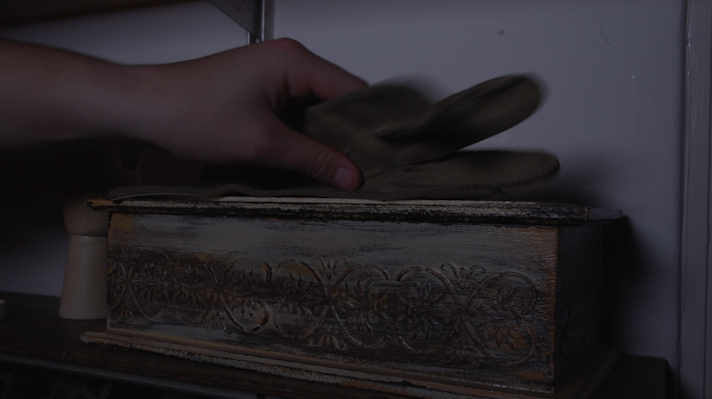
The man wore a dark long black coat and black clothes to connote a sense of mystery and danger and that he has a dark and evil side. He wore gloves it tells the audience that he wants to leave no trace. The man wore a fedora hat because at the end of the thriller there is a silhouette of him in front of a door, this made him appear as an intimidating figure.

The role of make-up was extremely important because it not only heightened the eerie and psychologically disturbing factor of the opening sequence but also adhered to societies stereotypical view that females should wear make-up to be beautiful, it discusses the way in which women are controlled (made to look beautiful even in death)

The red of the lipstick being smeared on her lips connoted a sense of danger and blood however it added a subtle element of love, which confused the audience on the intentions of the psychopath whether it was motivated by love or anger/revenge.

The use of the colour red is extremely striking and contrast the paleness in her skin
In the shot where she is having her nails cut, there is the first instance where we notice a subversion of the female stereotypes because her hands and nails are covered in mud not typical for a girl; we usually associate dirt with men and manual labour. This is not only visually displeasing but as well subverts the stereotype that girls are clean and well-kept; this does make the audience question of where she has been and if the girl is alright.
The nails are then painted a bright nude pink, the colour pink connotes the innocence of a child and a non-threatening nature this is adhering because it shows her as girlish and calming.

In the shots where the girl was present, the lighting was much brighter, for example, the shot with the nails above. The use of soft lighting diffuses shadows on her skin and also connotes a natural and silky quality. On the other hand, the man was lit by Ultra-low key lighting which accentuated the contours of his face, this heightened the sense of isolation felt by the viewer. We can see that the lighting used represented the actors adhering to both stereotypes the female was presented as soft and natural whilst the man was dark and obscure.
The girl is always facing the camera, this position creates intimacy and invites the audience to empathise with the character, she bonds with the viewer, this adheres to the stereotype that females are warm and nurturing.

On the other hand, the man has his back to the camera, which suggests his alienation from the world, it also makes the viewer guess what the man is feeling inside which highlights the sense of mystery. He is mainly framed at the top of the frame which connotes his power and authority, this adheres to the male stereotype that men are strong and dominant; additionally, it adheres to the stereotype of older age, where elders are seen as having more authority and control over younger people.

The props used in association with the girl are the make-up brushes, lipstick, mascara and eyelash curler. All of these props are mainly used by women and connote femininity, youth and beauty these associations adhere to the stereotypes that are associated with women. In the shot of the nails being cut with sharp scissors, the viewer feels uncomfortable because, stereotypically, we do not associate a violent prop (scissors) against a woman’s skin, this makes the shot feel creepy, because the semiotics of the scissors suggest danger and that’s not an association we generally make with females in the media.

Camera:
The camera angle in the shots of the man all had a low angle, this made him appear as if he was towering above the viewer and connoted his controlling figure this is also adhering to the male stereotype that a man leads a woman and controls her.
↗↑↖
Low angle this was the direction and how the camera was directed at the man
The girl had a mixture of close-ups and extreme close-ups these shots were used for dramatic effect and to contrast the medium shots of the man. The cuts to the close-ups, surprise the audience and heightens the intensity of the sequence, this is an unnatural shot that discomforts the audience and hints at the unsettling nature of the sequence.

The shot of her brushing her teeth was intentionally framed, in order to appear as if she was brushing her own teeth. This shot gives enough detail from the skin and lips to connote that she is female this shows that the gender is obvious to the viewer. Additionally, the extremely close shots of the eyes, make the subject appear very vulnerable and susceptible to harm, which is an adhering stereotype because the female is being represented as weak and fragile.
In the shot where the mud in the girls hair is being washed off, the camera has a high angle, looking down at her. This is a binary opposite to the low angle shots of the man where he is being represented at powerful, compared to the high angle on the girl where it connotes that she is subservient and lower than the man, which is an adhering female stereotype.

Editing:
The shot durations on the girl during the make-up scenes were longer. This connoted the adhering stereotype that women take and spend longer amounts of time to get ready to become more attractive.
All the transitions were straight cuts, to sustain the tension and build the pace throughout. The shots with the man putting on the glove had very fast straight cut transitions this connoted that the man is precise, decisive and angry all of which are adhering stereotypes of the male gender.

↓

↓

Most of the shots were of long duration because it drew out the suspense and limited the information given to the audience.
The order and composition of the shots were carefully organised in order to limit information given to audience. For example, Mud in hair → nails cut → eyelashes curled → man putting on gloves. These shots were strung together to subliminally connote that the girl is in danger and is a victim which adheres to the stereotype that women are weak and powerless.
Sound:
The use of the non-diegetic sound of the record player connotes that the man is much older, this contrasts the young girl. Viewers usually associate older age with power therefore, we used sound to adhere to the stereotype that older people have more power and control in society.

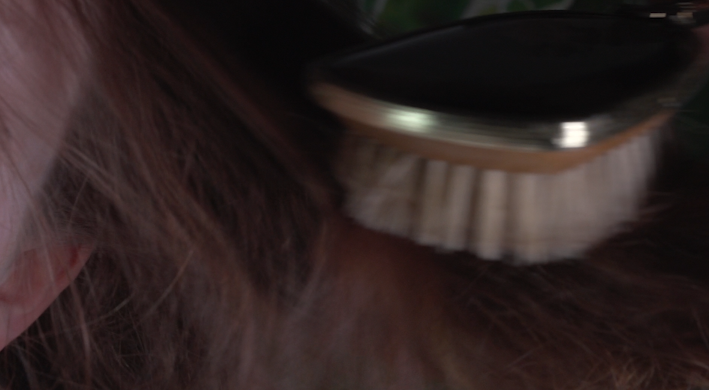
There is the diegetic sound of hair being brushed, the sound is unsettling to hear. The sound of the brush passing through the hair is soft, this is then associated with the girl which represents her as gentle which is an adhering stereotype for women. However, the sound of the hair brushing is a subversive stereotype for the man because the soft brushing connotes that he is gentle and caring for her, which are stereotypes not associated with men.
In conclusion, the thriller opening sequence does mainly show adhering stereotypes of gender and age for both male and female characters. Although, there are a few moments where these stereotypes are subversive and we see male and female representations shift and oppose the stereotypes created by society. .
Saturday, 6 February 2016
Friday, 5 February 2016
Post Production - Editing
Film editing is a process in
post-production. The footage collected is placed on an editing software and
gets edited into what becomes the final film. In our case after having finished
the production stage ( shooting the opening sequence ) we began editing our
footage using Adobe Premier Pro.


During the process I had to
make a few key decisions, the first was deciding with my team on which shots to
use from the library and which shots not to use. The other was deciding on the
shot order, although we had a shot list, due to some continuity issues and the
shots available I had to re-arrange some of the shots so they moved fluidly and
to maintain continuity.
Before starting the editing
process we had to recognise the need to allow everyone in the group to have a
chance to edit. We also had to manage our time and the process which we carried
our editing in order to finish by the deadline. To do this, during our first
session we selected the footage from the library then organised them in bins so
that they would be easy to find. Additionally, we placed all the shots in order
before editing each individual clips. This was to facilitate the editing
process and allow us to produce a finished thriller opening sequence .

These are the raw clips shot they are in the library
When beginning the editing
there were certain expectations established for each member in the group. As
co-director during the shoot, I was involved in the editing process and took
final executive decisions if the group or project came at a crossroads[A3] .
Our first session
The first thing we did was reviewing
and selecting the shots. This was so we knew which shots we had took during the
shoot, some scenes were filmed multiple times so we had to choose the best clip
from the selection of shots. We then dragged the best shots, that met the shot
list and we placed them on the timeline, in order.
The shots selected were then
placed on a timeline. A timeline is an interface that allows you to place the
footage on. It is a foundation for editing and producing your thriller. It
allows you to place your shots in order, edit shots and view the time of the shots .

This is a zoomed out shot of the timeline

During the process it was
important to name and re-name clips because it made it easier and quicker in
selecting and finding shots in the bins. It let us mark the shots we liked and
wanted to use.
Editing the clips
When editing there are various
tools available to use. One of which is the ‘razor’ tool, it allowed us to cut a clip into two separate clips ,
for example in one shot we had ‘Mike’ put on a pair gloves however we found
that during the shot there was a long pause before any action resumed;
therefore we used the razor tool to cut the clip and trimming it down so that
we had two good shots of him putting on a pair of gloves .

This is the 'razor' tool

We layered the shots where 'Mike' is putting on the gloves so
that we could match on action. We did this using the razor tool.
When cutting and compositing
the shots we had to make sure it was cohesive and cut from one shot to another
fluidly. If we cut on action we had to make sure to match on action for a
smooth transition between shots.
Decisions made to the sequence of order of the shots
We used the timeline to display
our shots and bring together all of out selected footage. The timeline helped
with the issue of continuity. It let us view them sequence. We were able to put
the shots in order according to our shot list and make sure that the storyline
was understandable and coherent from the audiences perspective, whether they
understood it or not. When arranging our footage we used 3 layers but in other
places we used 4 to create variety. The layers allowed us to layer clips and
have a higher degree of accuracy in transitioning between clips and adjust how
they blend into each other .

Both these images show how we layered the clips on our timeline

Mastering Continuity
During the editing there were
many instances where we had to match on action. In one scene ‘Mike’ has to exit
the room, it starts with him walking to the door it then cuts to a close up of
his fingers flicking the light switch which cuts to him opening the door with
the camera dead on him from the back (exposing his silhouette), it lastly cuts
to a profile shot of ‘Mike’ whilst he leaves the room. It was important on
cutting the shots at exactly the right time in order for them to run smoothly
through each other and make it appear seamless.
Technologies Used
To edit our footage we used
Adobe Premier Pro CC. Premier Pro is a video editing software, it was the
platform which we used to edit, it’s various functions and tools allowed us to
edit and compose our thriller opening sequence.
Overall, we have completed the
major editing work, all we need to do is to make some final clean ups and add
sound, effects and titles.


This is an intro video on Adobe Premier Pro CC from the Adobe website
Overall, we have completed the
major editing work, all we need to do is to make some final clean ups and add
sound, effects and titles. The editing process helped me develop my time management
skills and as well helped me breakdown the process so that we could work step
by step efficiently.
Behind the Scenes
Behind
the Scenes:
During our shoot there were things that went
well, problems we encountered and what we did to solve them.
We found that our shoot went well because we
were able to manage our time and complete all the shots. We also managed to get
extra shots to add to the thriller. I was extremely happy of how the shots came
out on camera and the how the mise-en-scene elements looked on screen. I was
also happy that we were able to get a macro-lens and film the extreme close-ups
of the eye.
Despite of the positive aspects to the shoot we
did encountered some problems.
- Just before filming, Mia, the actress was called for a theatre rehearsal and we lost her for 1 hour, in this time we took advantage of the time without her and took the detailed shots of the bathroom.

This was a basic outlined schedule of who was available and at what time we could shoot the actors scenes. This helped in setting and managing our time so that we could use time effectively.
- Another problem we encountered was that the make-up artist we were going to hire was fully booked, so we scouted around school for someone who could do the dead girls make-up; luckily, we found Sasha Ward Smith who is excellent in special effects make-up.

This is a photo of Mia before make-up

Mia with the make-up on
- The shot of tightening the corset required for the camera to be behind her this provided an obstacle for the person pulling the corset. So we had to have one person either side of her, pulling the string of the corset.

Corset being tightened
- During the shoot, because it was in a boarding house we had people coming through the hallway and accidentally interrupting shots and making noise. This caused us to place ‘DO NOT DISTURB!’ signs around the hallway.
One of the biggest logistical problems we
encountered was the shot of the hair in the sink with the mud. We had to get an
almost birds eye shot of Mia’s hair, however she had to be in front of the sink
so the camera couldn’t fit. We resolved it be extending tripod to it’s max
height, then Mia knelt underneath the camera inside the frame of the tripod.
This meant that the camera was not obstructed and we could get a clear shot of
the sink and her hair.


Mud on nails

Mud being applied to feet
The night before the shoot, we talked with the
actors to make sure they new which costumes and make-up they were bringing for
the shoot. On the morning of the shoot, we met up with the cast and crew to
make sure all we had all the camera’s and equipment. We discovered that we were
missing the fedora hat of Mike the actor, to resolve this I went to the Theatre
department where I managed to get a black fedora hat.


We made sure we had all the props, such as the record player, jar of hair and make-up. We also tidied the room and clean the floor, by vacuuming. A lot of cupboards and drawers had to be moved to another room and the coats hanging behind the door were moved as well. The beds had to be moved so they would be parallel to the wall to give us enough space to move the camera and lights and allow for maximum space in the small room. We also went flower picking to fill the flower pots, we looked for dried, wilted flowers to give the impression of the old atmosphere.


What took the longest time at the start of the
shoot, was to set up the camera and lights in the bathroom. Due to the natural
blue light coming from the bathroom window, we needed time to achieve the right
balance of colours on the camera, in order to give the right cold and slightly
blue colour we wanted. Additionally, because of the cramped space of the bathroom
we had to carefully set up the equipment in order to fit everything in. Another
problem we encountered was to have the right extension cables to reach the
bathroom from the room.
One of the biggest problems we encountered as a
group, was the logistics of the mud in Mia’s
hair. Although, we had a shot list, we had to re-arrange the order of
the shots so that Mia’s hair had the mud in it last. We also we had to be
careful not to get the dress dirty.

Mud in hair
I really enjoyed filming the scenes with the make-up because it looked great on camera. I was very happy that we were able to get the macro-lenses to film the really close eye shots, because it was extremely pleasing to see something that you envisioned finally appear on screen. Overall, I really enjoyed the experience of filming our idea and the ability to create a professional looking film from it.

Setting up the mantle before the shoot
I think our group worked very well together, both Olly and Naomi, worked on the technical side and operated the equipment such as the camera and microphone. Whilst, Natasha and I directed the shoot, set up the room and made sure each shot looked like what we were going for. During the shoot everyone, had something to do whether it was to direct, grab props or set-up the room. In conclusion, I believe we worked really well as a team and our individual talents were helpful in contributing to the overall success of our shoot.

Wednesday, 3 February 2016
Mise-en-scene Video
After our shoot, we created a behind the scenes/explanatory video on our thriller shoot.
The video explores into all the Mise-en-scene elements used in the thriller and describes the reasoning behind the choice of set, costume, make-up and props. We used various time-lapses and footage of the actual behind the scenes with myself commentating and explaining other areas of the thriller's Mise-en-scene. Natasha and Olly described the behind the scene footage.
The behind the scene shots and the script were filmed and written by all of us. The main presenting for the video was done by myself and it was edited by Olly and Natasha.
Below is the embedded video hope you enjoy!!!
The video explores into all the Mise-en-scene elements used in the thriller and describes the reasoning behind the choice of set, costume, make-up and props. We used various time-lapses and footage of the actual behind the scenes with myself commentating and explaining other areas of the thriller's Mise-en-scene. Natasha and Olly described the behind the scene footage.
The behind the scene shots and the script were filmed and written by all of us. The main presenting for the video was done by myself and it was edited by Olly and Natasha.
Below is the embedded video hope you enjoy!!!
Monday, 1 February 2016
Possible Target Audience
Looking at our thriller idea, I think that our target audience would be males in their late 20's. This is because generally males prefer the thriller/action and horror genres than females, because the topics discussed in these films stereo-typically are upsetting to women. I think that they would be in their late 20+ and above, because the film is a psychological thriller, requiring the audience to think and focus for the entire film to understand the plot; and usually, young men 15-24 tend to prefer Action/Adventure films, which are visually exciting compared to complex and detailed psychological thriller films. I will further research this in my Evaluation Task 4, so that I find a definite age range and gender. Therefore, I can have a better understanding of the demographic that would watch my film.


Subscribe to:
Posts (Atom)